

Aging, Systemic Disease and Oral Health: Implications for Women Worldwide (Part II)
Course Number: 330
Course Contents
Statistics
Stroke has become a major global health concern for women. Although historically viewed as a predominantly male condition, stroke and heart disease together account for 8.6 million deaths annually and rank as the third leading cause of death among women worldwide. Each year, approximately three million women die from stroke, and an additional 2.1 million die from hypertensive and inflammatory heart diseases. Women in low‑ and middle‑income countries are disproportionately affected, experiencing higher rates of disability after stroke and a greater share of overall cardiovascular deaths.10
Among females 20 years of age and older between 2021 and 2023, 61.9 million females (44.1% of all females) had some form of cardiovascular disease, compared with 68.7 million males (53.7% of all males). Using data from 2021 to 2023, the prevalence of stroke was 4.3 million females (2.6% of all females) vs. 4.7 million males (3.3% of all males), 20 years of age and older.11
Despite these realities, many women continue to perceive cancer as their greatest health threat. In fact, heart disease remains the number one killer of women, causing more deaths than all forms of cancer combined, yet only one in five women recognizes heart disease and stroke as their most significant health risk. Cardiovascular disease kills more women than all forms of cancer combined and yet only 44% of women recognize that cardiovascular disease is their greatest health threat.12 This underscores the critical importance of improving awareness of stroke risk factors, prevention strategies, and evidence‑based treatment.
Stroke has several modifiable risk factors, making up to 80% of strokes preventable; yet approximately 795,000 Americans experience a new or recurrent stroke each year. Stroke kills nearly 129,000 Americans each year, making it the 5th leading cause of death.13 An estimated 55,000 more women than men suffer a stroke annually, and one in five women will experience a stroke in her lifetime. Women account for 77,109 stroke‑related deaths each year compared with 52,367 deaths among men.10 When women experience a stroke, they are typically older and in poorer overall health than men, contributing to worse outcomes. Stroke is the No. 3 cause of death in women and kills more women than men. In fact, one in five women will have a stroke.14 According to the American Heart Association, Go Red for Women is about education and motivation.15 Get connected, and find ways to get connected to and support other women.15 Black and Hispanic women aged 70 years and older have a significantly higher risk of stroke than white women, even after controlling for age, sex, education, and insurance status, highlighting persistent racial and ethnic disparities in cerebrovascular health.16
The American Heart Association further reports that 3–4% of individuals who survive a first stroke will experience a second one, with women more likely than men to have poorer functional outcomes.11 These disparities underscore the importance of recognizing stroke risk factors, promoting prevention, and understanding the unique vulnerabilities women face across the lifespan.
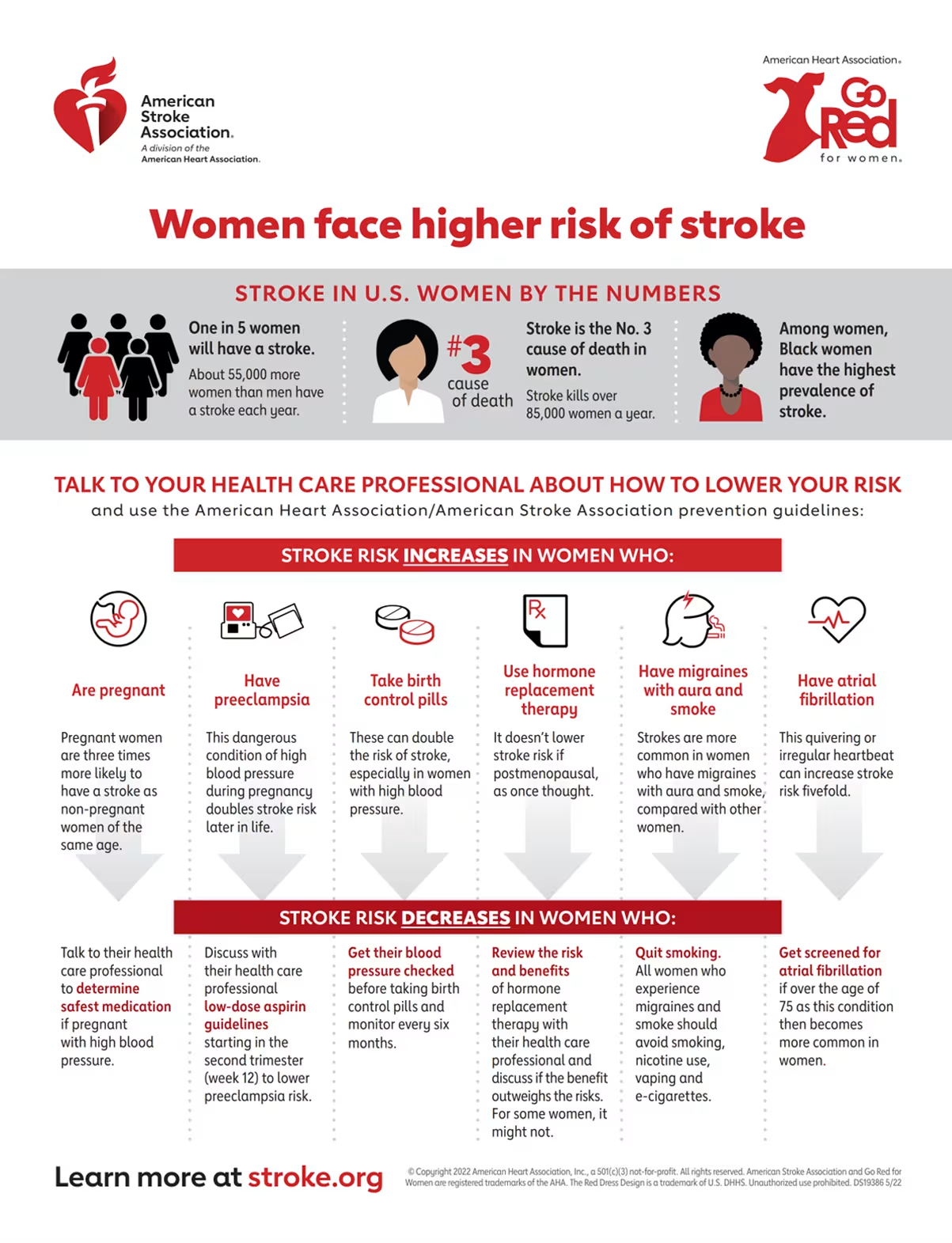
Know Your Risk Infographic15
“Women & Stroke: 2026 Update” 16 Purpose: Highlight women’s disproportionate stroke burden and unique risk factors. Sections & Visuals
1. Title + Hero Stats
Women Face a Higher Lifetime Risk of Stroke
1 in 5 women will have a stroke
55,000 more women than men experience stroke annually
![[EN] - ce330 - Picture 3](https://images.ctfassets.net/u2qv1tdtdbbu/5iZvuGDZ4nZY6SqfPa4Uif/f7da0d0018b54ac7526fcda52589387b/Picture3.png?w=3840&q=70&fm=avif)
2. Updated U.S. Data (2026)
795,000 strokes/year
77,109 female deaths vs. 52,367 male deaths
Black women have highest prevalence
![[EN] - ce330 - Picture 4](https://images.ctfassets.net/u2qv1tdtdbbu/4TWjR9ejaZBfbvEv55iveT/13cf25d3415aea0cb6ed11ed27776c89/Picture4.png?w=3840&q=70&fm=avif)
3. Female‑Specific Risk Factors
Pregnancy (3× risk)
Preeclampsia (2× later‑life risk)
Birth control pills (↑ risk with hypertension)
HRT (does not reduce risk)
Migraines with aura + smoking
Atrial fibrillation (5× risk)
4. Prevention (80% preventable)
BP monitoring
Medication review
Smoking cessation
AFib screening
FAST stroke signs
Learn more at stroke.org
![[EN] - ce330 - Picture 5](https://images.ctfassets.net/u2qv1tdtdbbu/6RfHjXbIAyHZr1twFRxbDq/c3445de57ba5918c4a634fd48f872221/Picture5.png?w=3840&q=70&fm=avif)
Stroke is the second‑leading cause of death worldwide and the third‑leading cause of death and disability combined.20 Being overweight or obese increases the risk of developing conditions that can lead to heart disease, such as high blood pressure, high blood cholesterol NIH external link, and high blood glucose.17 In addition, excess weight can also make your heart have to work harder to send blood to all the cells in your body. Women experience significant disparities in stroke care: they wait longer than men for evaluation in emergency departments, with an average delay of 12 minutes before being assessed and treated.20 Women aged 65 and older represent the largest proportion of stroke survivors, and because of their longer life expectancy, they are more likely to live alone following a stroke. As a result, women typically experience longer hospitalizations than men and are less likely to return home or enter rehabilitative care. Instead, they are more frequently discharged to long‑term or chronic care facilities,18,19 which can negatively affect their quality of life and long‑term independence.
Among non-communicable disorders (NCDs), stroke remains the second leading cause of death and the third leading cause of death and disability combined (as expressed by disability-adjusted life-years lost—DALYs) in the world. Recovery after stroke varies widely among individuals, both in the extent of improvement and the time course over which different functions return. Multiple biological and behavioral recovery mechanisms unfold at distinct stages following a stroke, each influenced by unique clinical and personal factors.20,21 Among adults aged 60 and older, stroke is the second‑leading cause of death after cardiovascular disease and the fifth‑leading cause of death among individuals aged 15–59 (Figure 3).17 Without coordinated worldwide prevention efforts, projections estimate that by 2030 there will be 7–8 million deaths resulting from approximately 23 million strokes annually.23 Although stroke incidence has declined in many high‑income countries, the absolute number of strokes continues to rise due to aging populations. Global projections indicate that stroke will become the second‑leading cause of death—surpassed only by ischemic heart disease—among aging populations worldwide.20
Figure 3. Global Stroke Facts.
- The World Stroke Organization (WSO) Global Stroke Fact Sheet 2025 estimates that the global cost of stroke in 2025 is over US $890 billion, which represents about 0.66% of the global GDP,20
- There were large geographical differences in age-standardized stroke incidence, mortality, prevalence rates, with the highest rates in Eastern Europe, Asia, and Sub-Saharan Africa.22
- There is a significant burden of stroke in Asia. Asia has the largest population in the world in 2023, estimated at 4.7 billion. Approximately 9.5-10.6 million strokes will be anticipated annually in the backdrop of a diverse group of well-developed and less developed countries with large disparities in stroke care resources. In addition, Asian countries are in varying phases of epidemiological transition.24 Despite improved public health policies and healthcare delivery, the burden of stroke remains high in China.25
- About 878,500 Canadian adults aged 20+ have experienced a stroke, that is 438,700 men and 439,800 women (according to national data from 2017–18. One-quarter of Canadians living with stroke are under age 65. Stroke risk rises rapidly after age 55.26
- Stroke occurs more than 100,000 times per year in the UK, once every five minutes. It is one of the UK's leading causes of death, responsible for 34,000 deaths annually. That's a life lost every 15 minutes.27
- While the stroke burden and attributable burden to stroke risk factors have decreased during 1990–2019. In the Middle East and North Africa, it is still unacceptably high, particularly in low-SDI (Socio-demographic Index) countries. 28 In fact, 87% of global stroke mortality rates are occurring in low and middle-income countries.23
![[EN] - ce330 - Picture 6](https://images.ctfassets.net/u2qv1tdtdbbu/6TSdLohgndeD3QcAefYhSl/53743cfb71fa2c5fa13bd52ef8cd04a7/Picture7.png?w=3840&q=70&fm=avif)