

Aging, Systemic Disease and Oral Health: Implications for Women Worldwide (Part II)
Course Number: 330
Course Contents
Demographic Trends
The demographic profile of the United States has shifted dramatically over the past century. In 1900, adults over age 65 represented only about 4% of the population—fewer than one in twenty‑five Americans. By 2019, this group had expanded to 47.8 million people, or 14.9% of the population. Projections indicate that by 2060, as the baby boom generation reaches advanced age, more than 98.2 million Americans will be 65 or older, comprising roughly one‑quarter of the total population.1 Notably, the U.S. adult population grew faster than the overall population between 2010 and 2020, reflecting accelerating aging trends.2
These demographic shifts mirror global patterns. According to the World Health Organization (WHO), women consistently outlive men, and the aging population is increasingly female. Among adults aged 60 and older, 54% are women; this proportion rises to 60% among those 75+, and to 70% among those 90+.3 This “feminization of aging” has significant implications for oral and systemic health needs worldwide.
The WHO’s World Health Statistics 2020, the first to capture the onset of the COVID‑19 pandemic, documented steady gains in life expectancy and healthy life expectancy over the previous two decades, largely due to reductions in maternal and child mortality and declines in premature deaths from noncommunicable diseases.4 However, the pandemic caused an estimated 4.5 million additional deaths in 2020 alone, reversing progress and disrupting health systems globally.4
Current global life expectancy at birth is 73.8 years for both sexes combined, with women living an average of 76.4 years and men 71.2 years.5 Evidence indicates that women outlive men by approximately six years in high‑income countries, and by about three years in low‑income countries. These differences are consistently reported in global demographic analyses from the World Health Organization (WHO) and the United Nations Department of Economic and Social Affairs (UN DESA), which track life expectancy trends across income regions.6 The number of adults aged 65 and older worldwide is projected to rise from 390 million to more than 800 million by 2025.7 Although no country is expected to have a life expectancy below 50 years, more than 50 million people still live in nations where life expectancy remains under 45 years.7
![[EN] - ce330 - Picture New](https://images.ctfassets.net/u2qv1tdtdbbu/7qLkBSnwU9c7A104hXALUi/58535b843d98d0af8107e787296be9a5/Picture1aaaaa.png?w=3840&q=70&fm=avif)
Table X. Key Demographic Indicators Relevant to Aging Women Worldwide.
| Indicator | United States | Global | Key Implications for Women |
|---|---|---|---|
| Population aged 65+ | 47.8 million (14.9%) in 2019; projected 98.2 million by 2060 (25% of population) | Increasing from 390 million to over 800 million by 2025 | Growing demand for geriatric and oral health services; disproportionate caregiving burden on older women. |
| Growth of adult population | Adult population grew faster than total population (2010-2020) | Rapid aging in all regions, especially LMICs | Accelerated need for preventive care and chronic disease management. |
| Gender distribution among older adults | Women consistently outlive men | 54% of adults age 60 and older are women. 60% of adults age 75 and older. 70% of adults age 90 and older. | Feminization of aging increases chronic disease, frailty, and oral health needs among older women. |
| Life expectancy at birth | About 79 years (women about 81 years; men about 76 years) | 73.2 years overall. 75.6 years for women. 70.8 years for men. | Women live longer with chronic conditions, increasing oral-systemic disease interactions. |
| Life expectancy gap (women vs. men) | Women outlive men by about 5 to 6 years | 6 years in high-income countries. About 3 years in low-income countries. | Longer survival increases cumulative exposure to oral disease, polypharmacy, and systemic conditions. |
| Impact of COVID-19 | Significant mortality and health system disruption | Estimated 4.5 million additional deaths in 2020 | Slowed progress in life expectancy and increased vulnerability of older women. |
| Countries with lowest life expectancy | N/A | More than 50 million people live in countries with life expectancy below 45 years. | Extreme disparities in access to oral and systemic health care for aging women. |
Breakout Box: What This Means for Oral Health
The rapid aging of the global population—especially the disproportionate increase in older women—has direct and far‑reaching implications for oral health care delivery worldwide.
Women live longer but with more chronic disease.
Increased longevity means greater cumulative exposure to caries, periodontal disease, xerostomia, and polypharmacy‑related oral complications.
The “feminization of aging” intensifies oral–systemic interactions.
As women make up 60–70% of the oldest age groups, conditions such as cardiovascular disease, diabetes, osteoporosis, autoimmune disorders, and cognitive decline increasingly intersect with oral health needs.
Global inequities shape oral health outcomes.
Older women in low‑ and middle‑income countries face limited access to preventive care, fewer dental hygiene services, and higher burdens of untreated oral disease.
COVID‑19 disruptions have widened gaps in care.
Delayed dental visits, reduced preventive services, and strained health systems have increased oral disease severity among older adults, particularly women with chronic conditions.
Demand for integrated, prevention‑focused care is rising.
Dental hygienists and oral health professionals play a critical role in early detection, risk assessment, chronic disease management, and interprofessional collaboration.
Caregiver‑supported oral hygiene is essential.
As more women live into advanced age with frailty or cognitive impairment, structured caregiver involvement becomes central to maintaining oral health and quality of life.
In short, demographic shifts are reshaping the oral health landscape. Understanding these trends is essential for designing equitable, gender‑responsive, and prevention‑oriented care models for aging women worldwide.
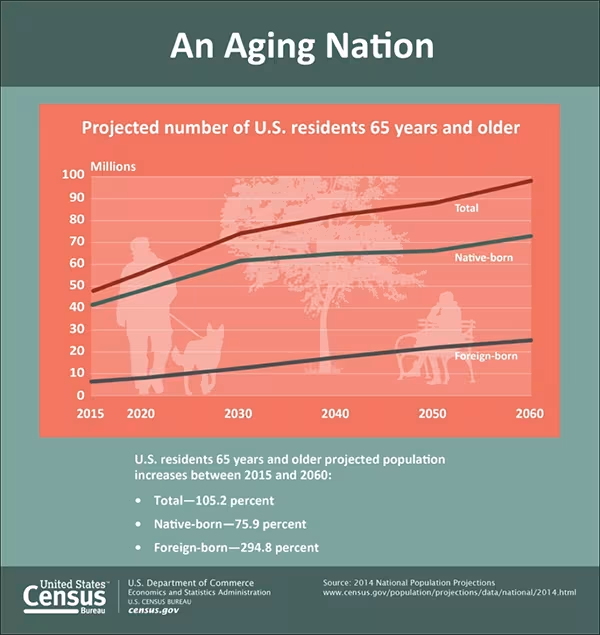
Figure 1. An Aging Nation. U.S. population aged 65 and older from 1900 through projected estimates for 2060. The figure illustrates the rapid growth of the older adult population and the increasing proportion of older women, reflecting long term demographic shifts in longevity and population aging
OMIT NEW 7
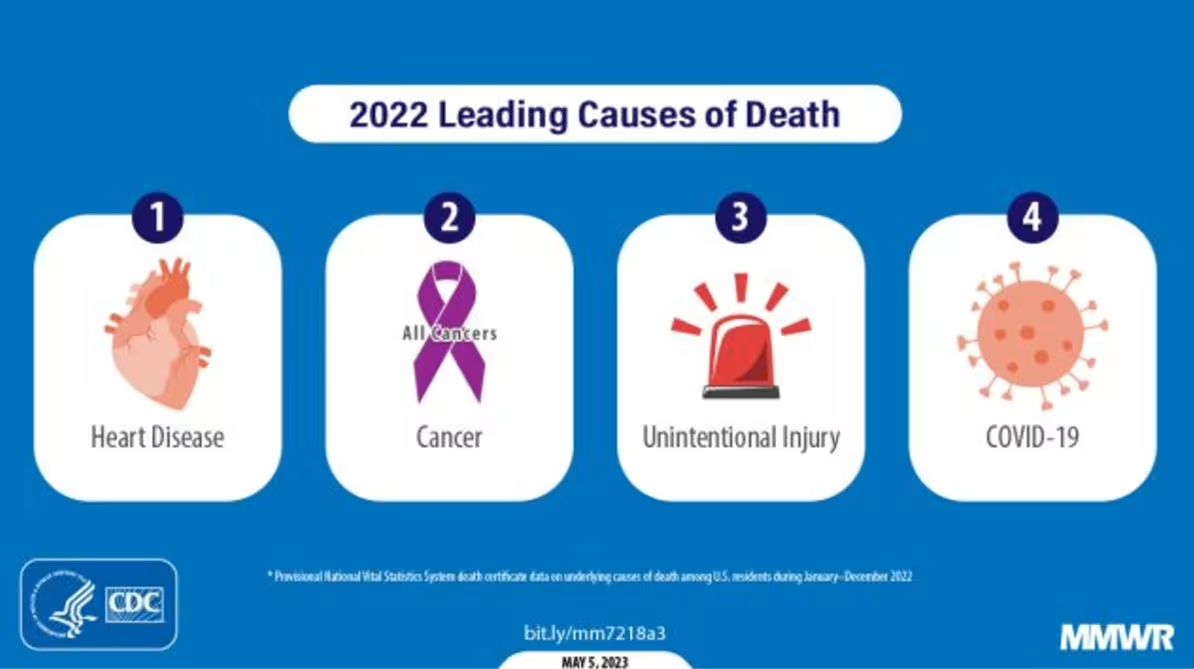
Leading Causes of Death (U.S.).
| Cause of Death | Deaths |
|---|---|
| Heart disease | 683,491 |
| Cancer | 619,876 |
| Accidents | 197,449 |
| Stroke | 162,639 |
| Chronic lower respiratory diseases | 145,643 |
| Alzheimer's disease | 116,022 |
| Diabetes | 94,445 |
| Kidney disease | 55,081 |
| Chronic liver disease and cirrhosis | 52,274 |
| Suicide | 48,824 |
Heart disease remains the #1 cause of death, exceeding cancer by more than 60,000 deaths.
Stroke has risen to the 4th leading cause as COVID‑19 mortality declines.
Heart disease, stroke deaths down, yet still kill more in U.S. than any other cause | American Heart Association.9
![[EN] - ce330 - Picture New 2](https://images.ctfassets.net/u2qv1tdtdbbu/1tkzhNLc52Gr2eQvqpvtY4/de8fbe1130554190e35a9c3b30e4b967/Picture2.png?w=3840&q=70&fm=avif)
The demographic trends described above indicate that although women are living longer, increased longevity does not guarantee a healthier life or one free from disease. Longer life expectancy does not necessarily translate into improved quality of life, particularly as the likelihood of experiencing multiple chronic conditions rises with age.4 Emerging research linking periodontal disease with the progression of systemic conditions further underscores the importance of understanding the unique complexities of women’s aging. As the global population of aging women continues to grow, oral health care professionals face both significant challenges and meaningful opportunities. Recognizing sex‑ and gender‑specific health concerns is essential to supporting the overall well‑being of older female patients and to delivering equitable, evidence‑based care.
This course will focus on three common conditions that women may experience as they age—stroke, rheumatoid arthritis, and depression. It will examine associated risk factors, research‑supported approaches to prevention and treatment, and clinical guidelines for oral health care. Home‑care strategies and product recommendations tailored to promote optimal oral health in aging women will also be addressed. As women live longer, the rise in chronic conditions and oral–systemic interactions becomes increasingly important for clinical practice. To translate these demographic trends into practical care considerations, the next section examines three conditions commonly affecting aging women, stroke, rheumatoid arthritis, and depression, and their implications for oral health, prevention, and treatment.